
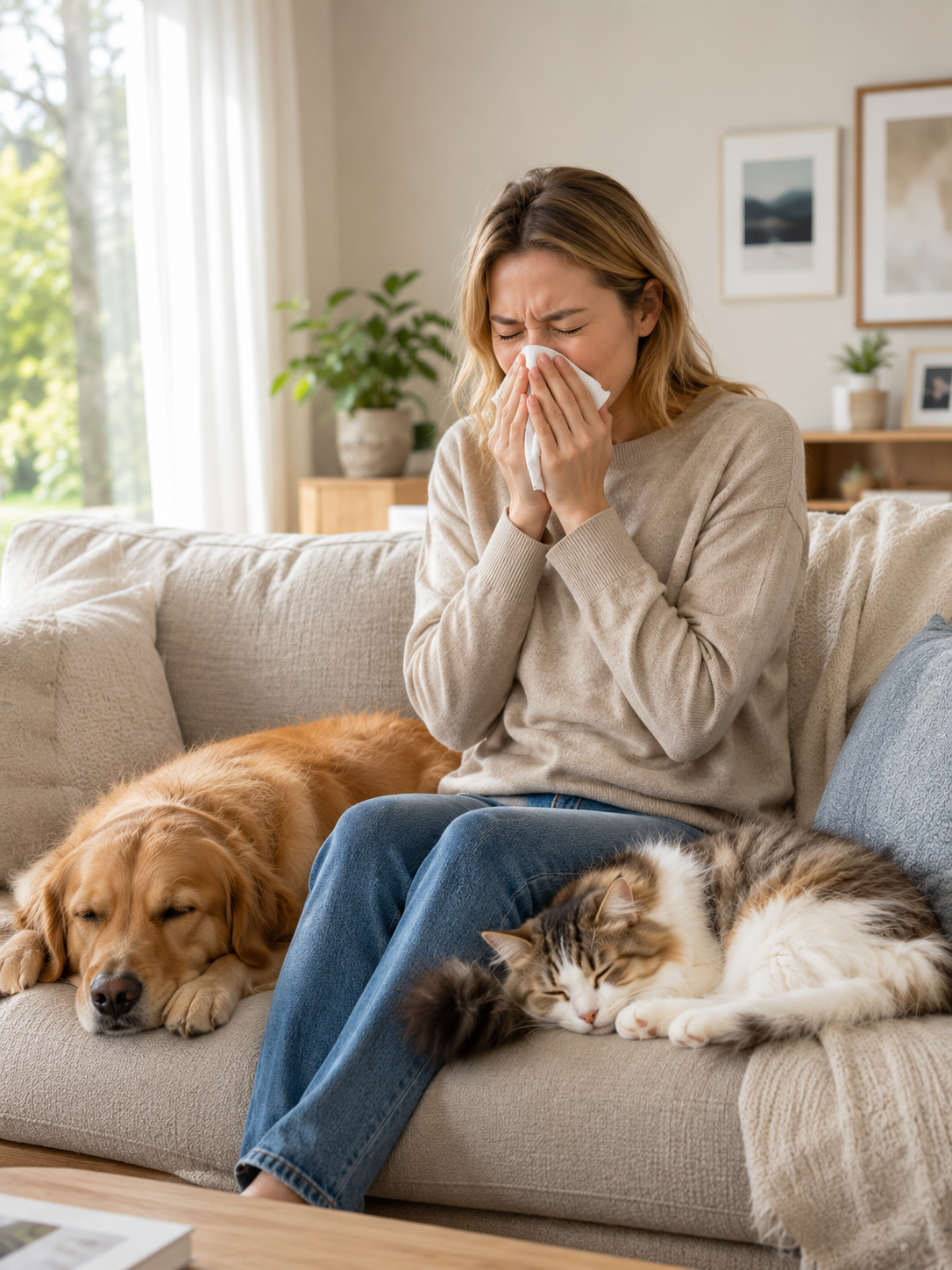
1. The Truth About Pet Allergies: It's Not the Hair
When you start sneezing, your nose gets stuffy, and your eyes get itchy, you might instinctively blame the cat or dog in your home. But here's a surprising truth—pet hair itself is not actually the allergen.
What Are the Real Allergens?
Allergy specialists tell us that the real causes of pet allergies are:
- Dander: Tiny flakes of skin that pets shed—this is the primary allergen
- Proteins: Found in pet saliva, urine, and oil gland secretions
- Hitchhiking dust mites: Hair collects environmental allergens like dust and pollen
💡 Fun Fact: Hypoallergenic pets don't mean they won't cause allergies at all—they produce fewer allergens or don't shed much hair (like the "hairless cat").
2. Common Symptoms of Pet Allergies
If you're allergic to pets, you might experience:
- Sneezing and nasal congestion
- Runny nose or postnasal drip
- Itchy, watery eyes
- Skin itching or hives
- Coughing and throat irritation
- People with asthma may experience difficulty breathing
3. Living With Allergies: Practical Management Tips
Create an "Allergen-Free" Bedroom

Making your bedroom a pet-free zone is the most important step. You spend 8 hours there every day—keeping it clean can significantly reduce allergen exposure.
Efficient Air Purification

Use an air purifier with a HEPA filter to effectively filter pet dander and tiny particles from the air. Consider having one in your bedroom and living room.
A Smart Cleaning Routine
- Vacuum at least twice a week with a HEPA-filter vacuum
- Frequently change and wash bedding in hot water (above 140°F / 60°C)
- Regularly brush your pet, preferably by a non-allergic family member
- Consider using allergen-proof bedding
🧹 Cleaning Essential: Pet hair and dander can be found everywhere—on sofas, curtains, and clothes. A reliable Pet Hair Remover Roller can quickly clean pet hair from fabric surfaces, making your cleaning routine much easier!
Give Your Pet Regular Baths & Grooming
Bathing your dog regularly (1-2 times per week) can significantly reduce dander. Cats may not cooperate, and over-bathing can damage their skin's natural oil layer.

Compared to bathing, daily brushing for cats is a gentler and more effective way to reduce allergens. Brushing not only removes loose fur and dander but also promotes healthy skin and reduces shedding.
✨ Recommended Tool: Good tools make all the difference. A high-quality Professional Cat Brush can:
- Deep clean hidden loose skin and fur
- Reduce allergens floating in your home
- Prevent hairballs and improve digestive health
- Strengthen the bond between you and your cat
Investing in a professional grooming brush is a smart choice for allergy sufferers!
⚠️ Important: If you're experiencing severe allergic symptoms (such as difficulty breathing or widespread hives), please consult a doctor first before deciding whether to keep a pet. Never stop taking allergy medications prescribed by your doctor without medical advice.
4. Tips for People Considering Getting a Pet
Test Before You Commit
Before deciding to get a pet, spend a few hours at a friend's house with similar pets, or visit a pet store or shelter to interact with them. This can help you test whether you'll develop allergies.
Allergy Testing Is Important
Before making a final decision, consider getting an allergy test at a hospital. This helps identify exactly what you're allergic to—it might not be the pet's hair at all, but the dander, or even ingredients in pet food.
Hypoallergenic Dog and Cat Breeds
If you're determined to have a cat or dog, consider these breeds:
- Sphynx (Hairless Cat): No hair means no shedding
- Poodle: Non-shedding breed, and their hair doesn't easily carry other allergens
- Portuguese Water Dog: A hypoallergenic breed suitable for allergic owners
- Pug: Short coat with relatively less shedding
🛒 Must-Have Pet Care Products
Pet Hair Remover Roller
Effortlessly remove pet hair from velvet, cloth sofas, cushions, and more with this portable, reusable roller.
View Details →Professional Cat Brush
Gentle yet effective brush for removing loose fur, tangles, and dander—ideal for long & short-haired cats.
View Details →