
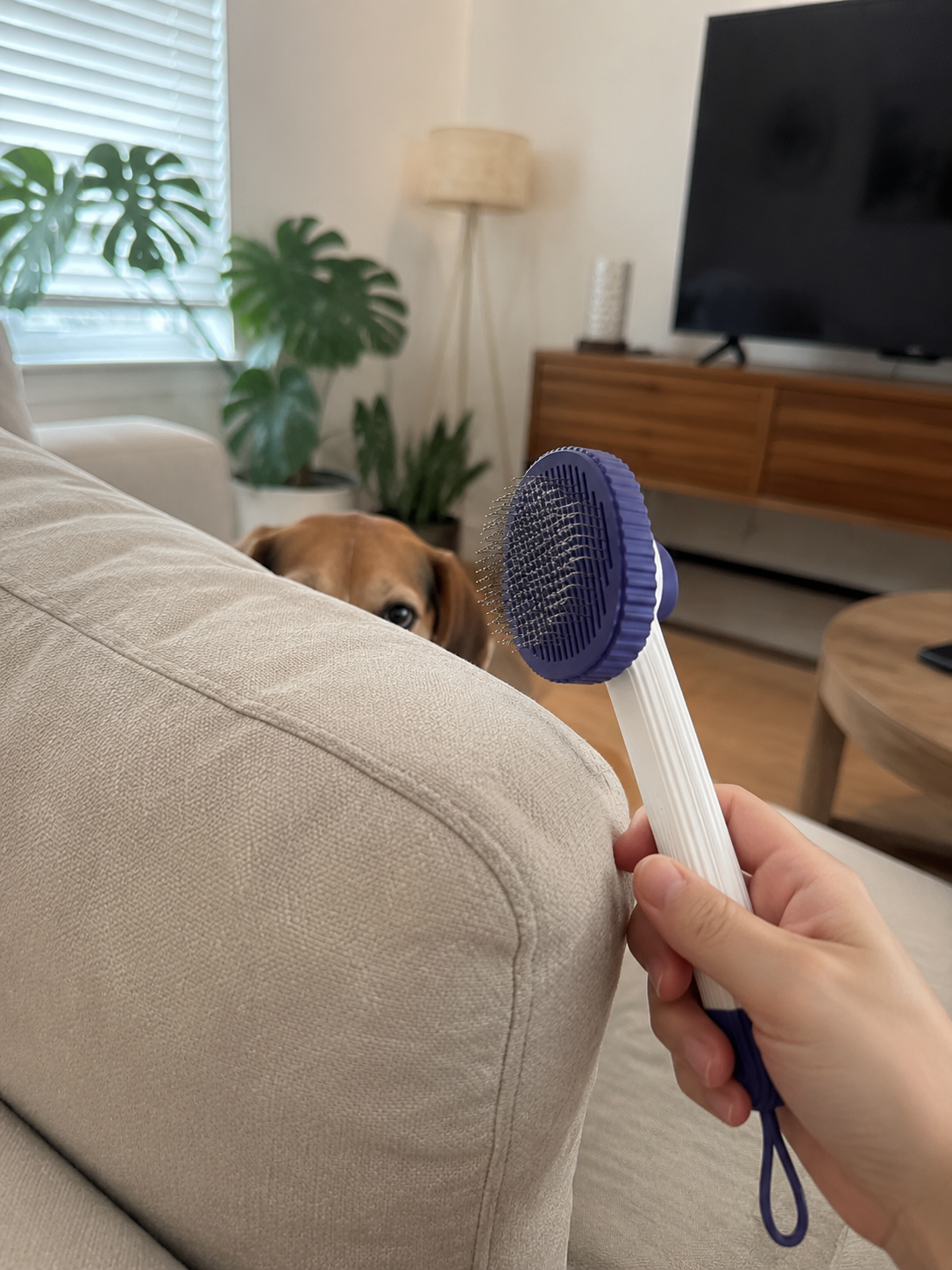
Sound Familiar?
Every time you bring out the brush, your furry friend acts like they've seen a ghost. Cats arch their backs and bolt; dogs turn and run. Why does something so good for them turn into a full-blown battle?
Before blaming your pet, consider this: it might not be them.
1. The Top 3 Reasons Your Pet Hates Grooming
Reason #1: Excessive Pulling on Tangles and Undercoat
Imagine someone aggressively dragging a fine-toothed metal comb through your tangled hair after a windy day at the beach. Ouch, right? Standard slicker brushes or stiff metal combs often rake sensitive skin or yank forcibly on stubborn mats. Once a pet experiences sharp pulling, they develop an immediate fear of the brush.
Reason #2: Static Electricity Sparks (Micro-Shocks)
During dry winter months or when brushing synthetic-blend fur, friction creates static electricity fast. Every stroke can deliver tiny micro-shocks directly to your pet's sensitive skin, making them jumpy and anxious every time the bristles touch them.
Reason #3: Negative Past Associations
If the brush only comes out right before a bath, a nail trim, or a stressful trip to the vet, your pet quickly learns that the brush is a warning sign. Over time, the mere sight of a comb triggers a fight-or-flight panic response.
2. The Step-by-Step Guide to Stress-Free Brushing
✅ Step 1: Choose the Right Tool
| Coat Type | Recommended Tool | Why It Works |
|---|---|---|
| Short hair (British Shorthair, French Bulldog) | Need brush / De-shedding glove | Gently removes loose fur |
| Long hair (Ragdoll, Persian) | Slicker brush + Dematting comb | Prevents and addresses tangles |
| Double coat (Samoyed, Husky) | Undercoat rake | Reaches the dense undercoat |
✅ Step 2: Pick the Right Moment
-
When your pet is relaxed (sunbathing, seeking affection)
-
When YOU are also calm (pets sense anxiety)
-
Keep sessions to 5-15 minutes max
✅ Step 3: Start with Touch
Don't go straight for the brush. Begin with gentle full-body pets to get them used to being handled. This could take days or even weeks—slow is fast.
✅ Step 4: Master the Proper Brushing Technique
-
Follow the Grain: Always brush in the exact direction of hair growth. Start at the hair ends and gradually work your way toward the roots to prevent painful tugging.
-
Tackle Mats Gently: Use your fingers to loosen large mats first. If a knot is too tight or close to the skin, never yank it—gently clip it out using round-tipped safety shears. Preserving skin health is far more important than saving a patch of hair!
3. The Secret to a Hair-Free Home Without Stressing Your Pet
While establishing a gentle grooming routine helps remove loose undercoat straight from the source,seasonal shedding is inevitable. Loose fur still ends up on your carpets, couches, velvet chairs, and favorite dark clothes.

The Smarter Two-Step Cleanup Strategy:
-
Keep grooming sessions short, gentle, and positive for your pet's emotional and physical comfort.
-
Use an electrostatic fabric remover—like the ACE2ACE Pet Hair Remover Roller—to effortlessly scoop leftover shed hair off furniture, bedding, and car seats in seconds.
The Bottom Line
Brushing isn't just about reducing fur on your furniture. It's an opportunity to check skin health, improve circulation, and strengthen your bond with your pet.
A different approach can give completely different results. Before your next grooming session, ask yourself: "Would I enjoy being handled this way?"