
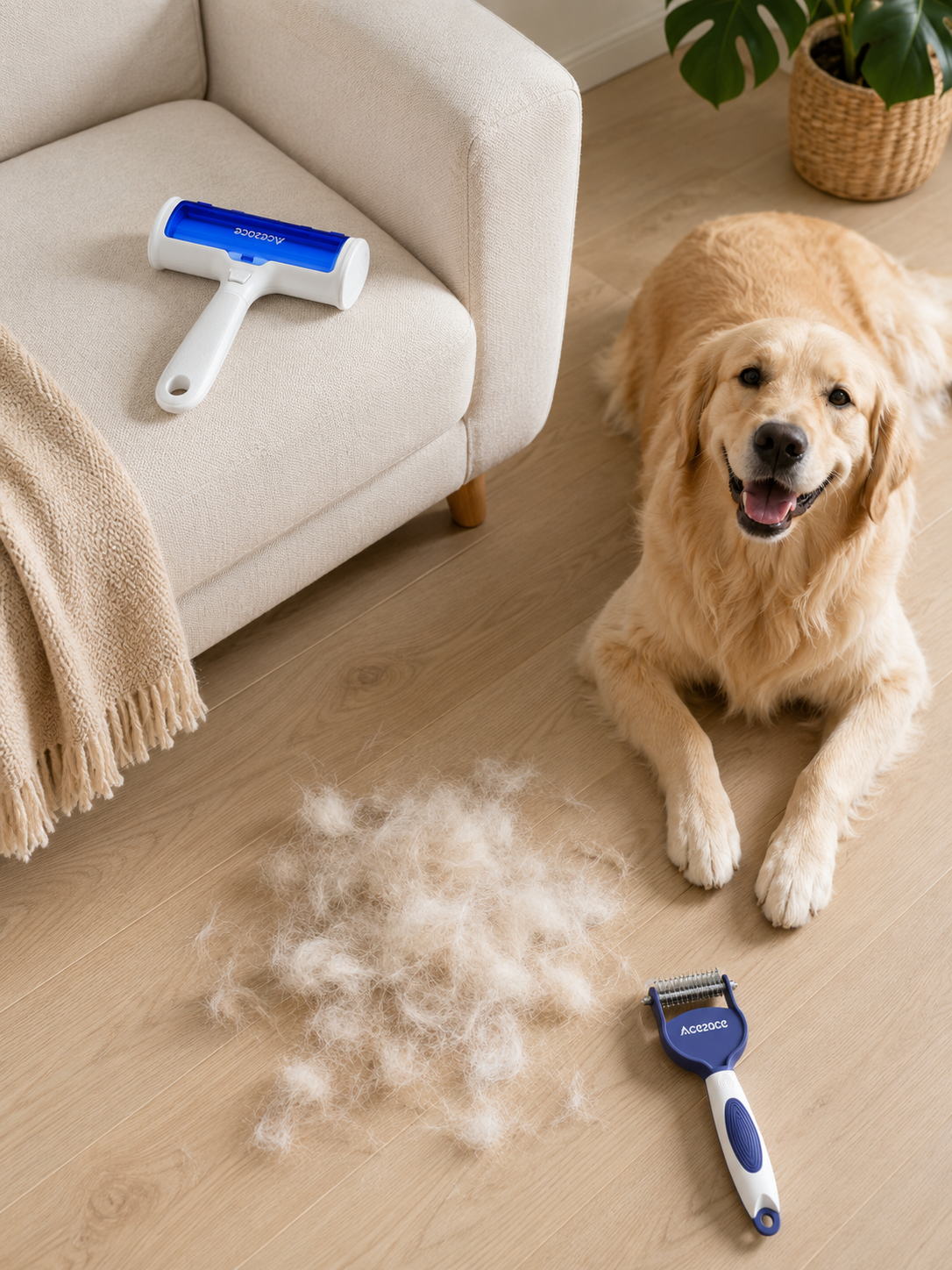
Every pet parent has stared at a fur-covered couch, clothing, or carpet and wondered: Is this amount of shedding normal? During peak pet shedding season, searches for "how much do cats shed" and "excessive dog shedding signs" skyrocket.
This guide breaks it down with practical, data-informed insights — so you know what’s normal, what’s not, and how to reduce pet hair efficiently.
🐶How Much Do Dogs Shed? The Numbers
Dogs have thicker and coarser fur. Ordinary short-haired dogs lose 300 to 600 hairs daily; double-coated medium and large dogs such as Shiba Inu and Husky shed over 1,500 hairs per day during peak molting seasons.
| Shedding Level | Common Breeds | Estimated Daily Hair Loss |
|---|---|---|
| Minimal | Poodle, Bichon Frise, Maltese, Schnauzer | < 5g (barely noticeable) |
| Moderate | Labrador, Golden Retriever, Beagle, Corgi | 5–15g (fills palm weekly) |
| Heavy | Husky, Alaskan Malamute, German Shepherd, Akita | 15–30g+ (brush fills daily) |
| Extreme (Seasonal) | Double-coated breeds (e.g., Husky, Samoyed) during "blowing coat" | 40–50g (massive shedding during seasonal molt) |
🐱How Much Do Cats Shed?The Numbers
Cats have dense fur structures, containing approximately 60,000 to 120,000 hairs per square inch. An adult cat naturally loses 200 to 500 hairs daily under non-shedding seasons. During spring and autumn molting periods, the shedding quantity surges by 40%, reaching 700 to 1,200 hairs per day.
-
-
-
Short-haired (Siamese, Bengal): 3–8g/day. Constant low-level shedding.
-
Long-haired (Persian, Maine Coon): 8–20g+/day. Requires intensive daily grooming.
- Indoor Cat Fact: Indoor-only cats experience 50% less seasonal spike than outdoor cats, but they often shed moderately 365 days a year due to artificial lighting.
-
-
⚠️ Excessive Shedding Signs: When to See a Vet
Normal shedding is gradual and even. Consult a veterinarian if you notice these abnormal shedding signs:
-
-
-
Bald Patches: Asymmetrical thinning or sparse spots.
-
Easy Tufting: Clumps of fur coming out with a minimal, gentle touch.
-
Behavioral Changes: Excessive scratching, licking, or lethargy. This suggests allergies, parasites (fleas, mites), or anxiety-driven overgrooming.
- Skin changes: Redness, bumps, crusting, darkening, or an unusual odor. These signal infection or inflammation.
-
-
🏠Expert Tips: How to Control Pet Hair at Home
Managing fur is about intelligence, not just effort. Follow this pro-cleaning workflow:
-
-
-
Brush Daily at the Source: Use a professional deshedding tool like the ACE2ACE Grooming Brush to remove loose undercoat before it hits your floor.
-
Upgrade the Diet: Supplement with Omega-3 fatty acids (fish oil) to improve skin health and reduce brittle shedding.
-
The "Fabric Defense" Routine: Vacuums handle floors, but for sofas and carpets, use the ACE2ACE Pet Hair Remover 2–3 times a week. It breaks the static bond that suction alone cannot touch.
-
Parasite Prevention: Ensure year-round flea and mite prevention to stop itch-driven hair loss.
-
-
📌 Final Takeaways
The goal isn’t to eliminate shedding—it’s to control it intelligently. By understanding the data behind your pet's coat, you can keep your furry friend healthy and your home fresh.
👉 Ready to master the shedding season? [Explore the ACE2ACE Pet Hair Solutions Collection]